Australian Shepherd
Complete Breed Guide
Everything you need to know about the Australian Shepherd — from breed history and official registry standards to temperament, health, colors, sports, titles, and competitions. Written from 17+ years of hands-on experience by AKC Breeder of Merit Toni Robbins of TAGA Ranch.
Recognized 1991
Original Registry
AKC Parent Club
"The Australian Shepherd is not just a dog — they are a calling. In 17+ years of raising, studying, and loving this breed I have never once taken for granted the privilege of being their steward. This guide exists because an educated family is the best possible home for an Aussie. Read every word. Ask every question. Then decide if you are ready for the most loyal, intelligent, and devoted companion you will ever know."
The Story Behind the Australian Shepherd
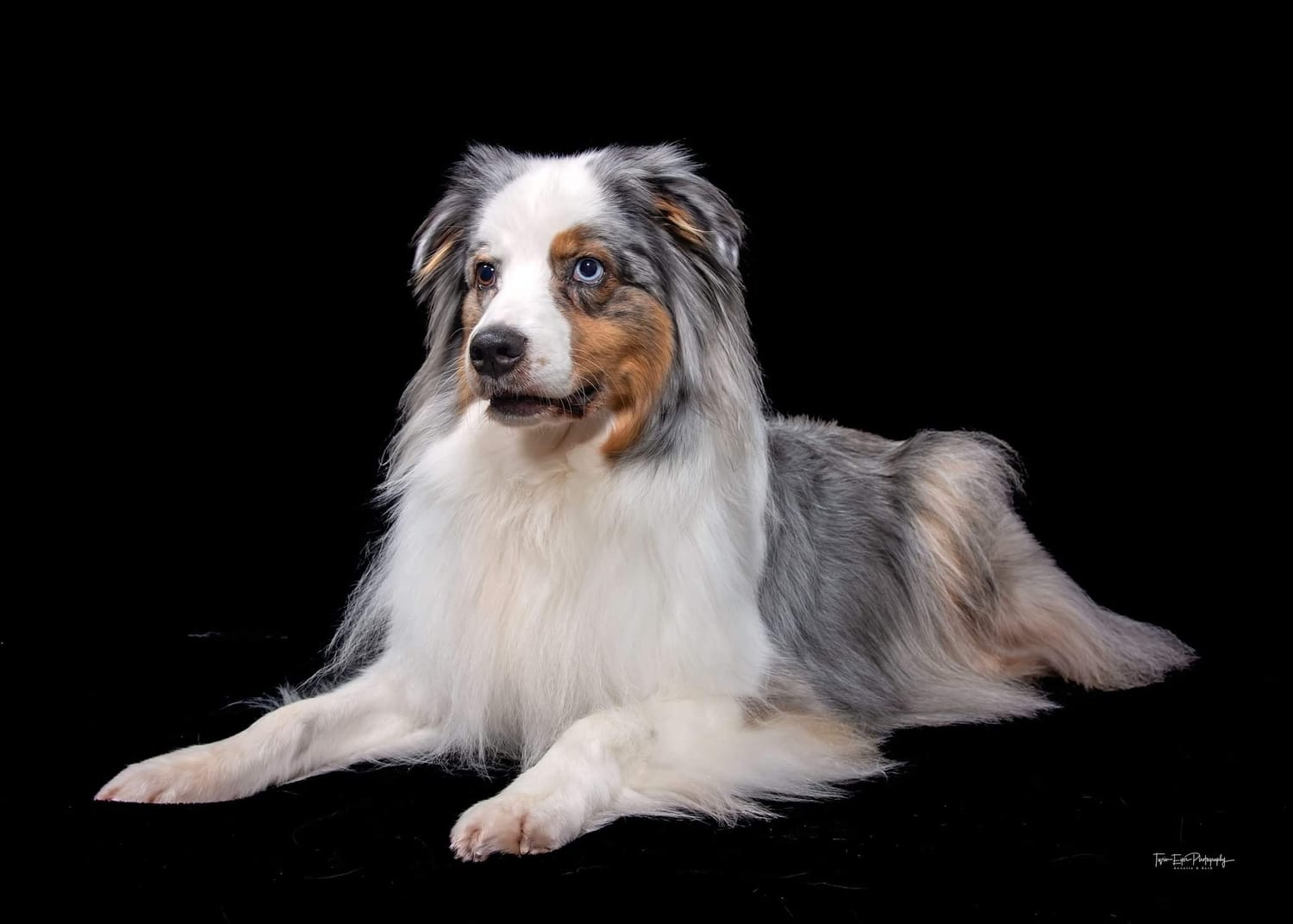
Despite their name the Australian Shepherd did not originate in Australia. The breed as we know it today was developed in the western United States in the late 1800s and early 1900s — primarily by Basque shepherds who brought their herding dogs through Australia before settling in America. The dogs were called Australian Shepherds because of their association with the Australian-imported Merino sheep they herded.
Over decades of ranching life in the American West the breed was refined into one of the most capable, versatile, and intelligent herding dogs in the world. Cowboys loved them for their natural herding instinct, their trainability, their loyalty, and their almost supernatural ability to anticipate their handler's needs. They were working dogs first — and that working heritage lives in every TAGA Ranch companion to this day.
The Australian Shepherd Club of America (ASCA) was founded in 1957 and remains the original registry for the breed. The American Kennel Club (AKC) recognized the Australian Shepherd in 1991. The United States Australian Shepherd Association (USASA) serves as the AKC parent club for the breed.
AKC
The AKC recognized the Australian Shepherd in 1991 and maintains a full conformation registry. AKC offers the broadest range of titles and competitions including conformation, agility, obedience, rally, herding, scent work, and more. TAGA Ranch is an AKC registered kennel and AKC Breeder of Merit.
Visit AKC.org →ASCA
ASCA is the original and oldest registry for the Australian Shepherd breed. Their breed standard emphasizes working ability and herding instinct above all. ASCA offers conformation, herding, obedience, agility, and tracking titles. Toni Robbins holds ASCA Lifetime Membership ID 601241.
Visit ASCA.org →USASA
USASA serves as the AKC parent club for the Australian Shepherd breed and works to preserve, protect, and advance the breed in the United States. They support health research, breed education, and responsible breeding practices. TAGA Ranch holds USASA membership ID 2843.
Visit AustralianShepherds.org →AKC Breed Standard At a Glance
With or without white and copper markings
"The breed standard describes what an Australian Shepherd looks like. What it cannot fully describe is what they feel like — the weight of their gaze when they lock eyes with you, the way they press against your leg when you are sad, the absolute devotion that lives in every cell of their being. I have raised hundreds of these dogs. I am still in awe of them every single day."
The Four Recognized Colors
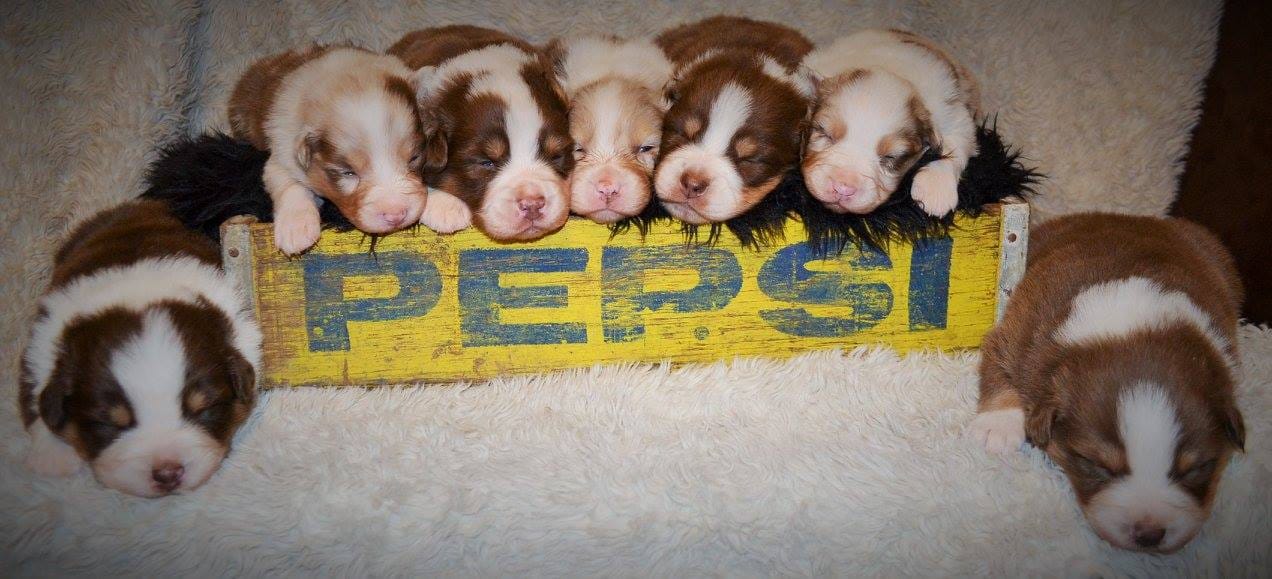
Australian Shepherds come in four base colors recognized by the AKC, ASCA, and USASA — each stunning in its own right. TAGA Ranch breeds all four colors.
Blue Merle
Marbled blue, gray, and black coat. Often with striking blue or heterochromatic eyes. One of the most visually stunning coat patterns in all of dogdom.
Red Merle
Marbled red, cream, and liver coat. Often with amber or blue eyes. A warm and striking variation of the merle pattern unique to this breed.
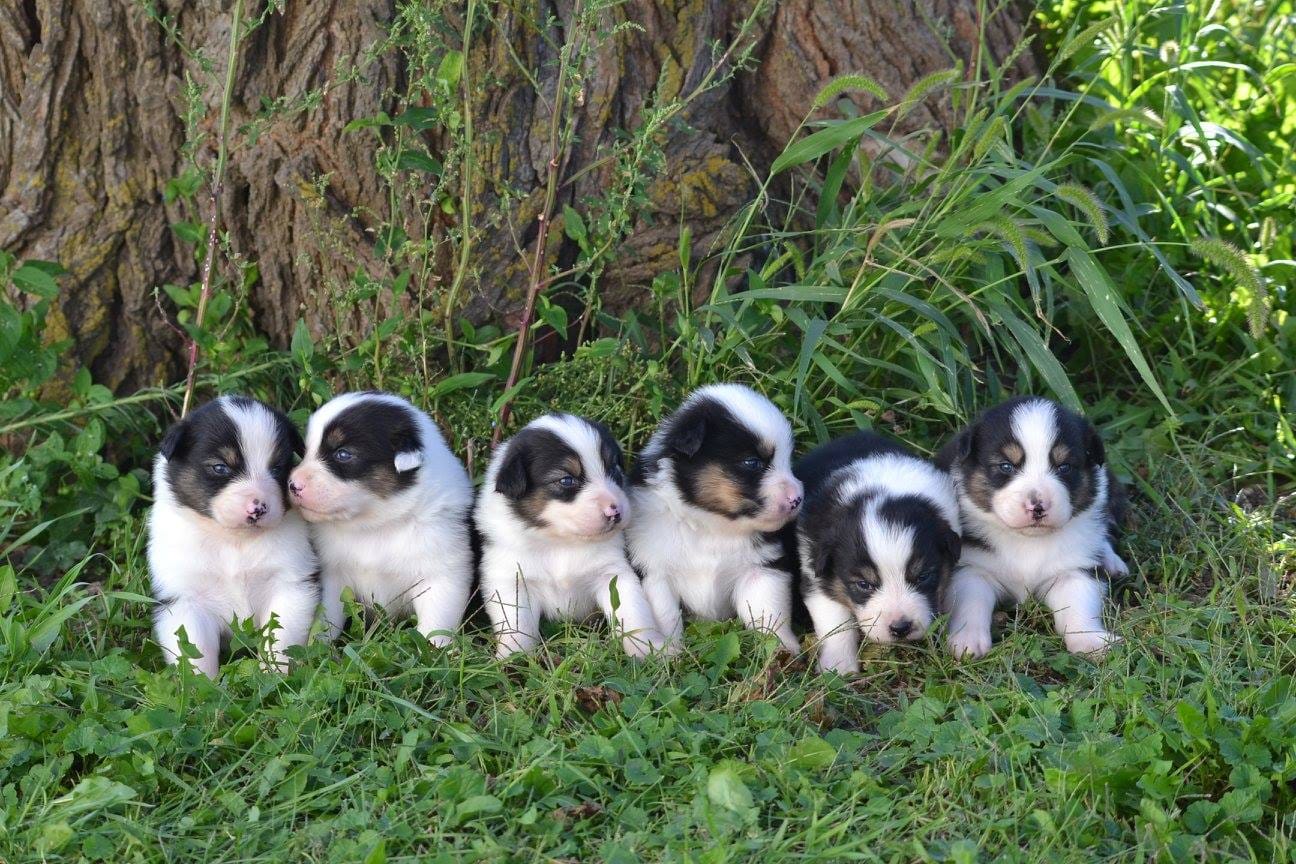
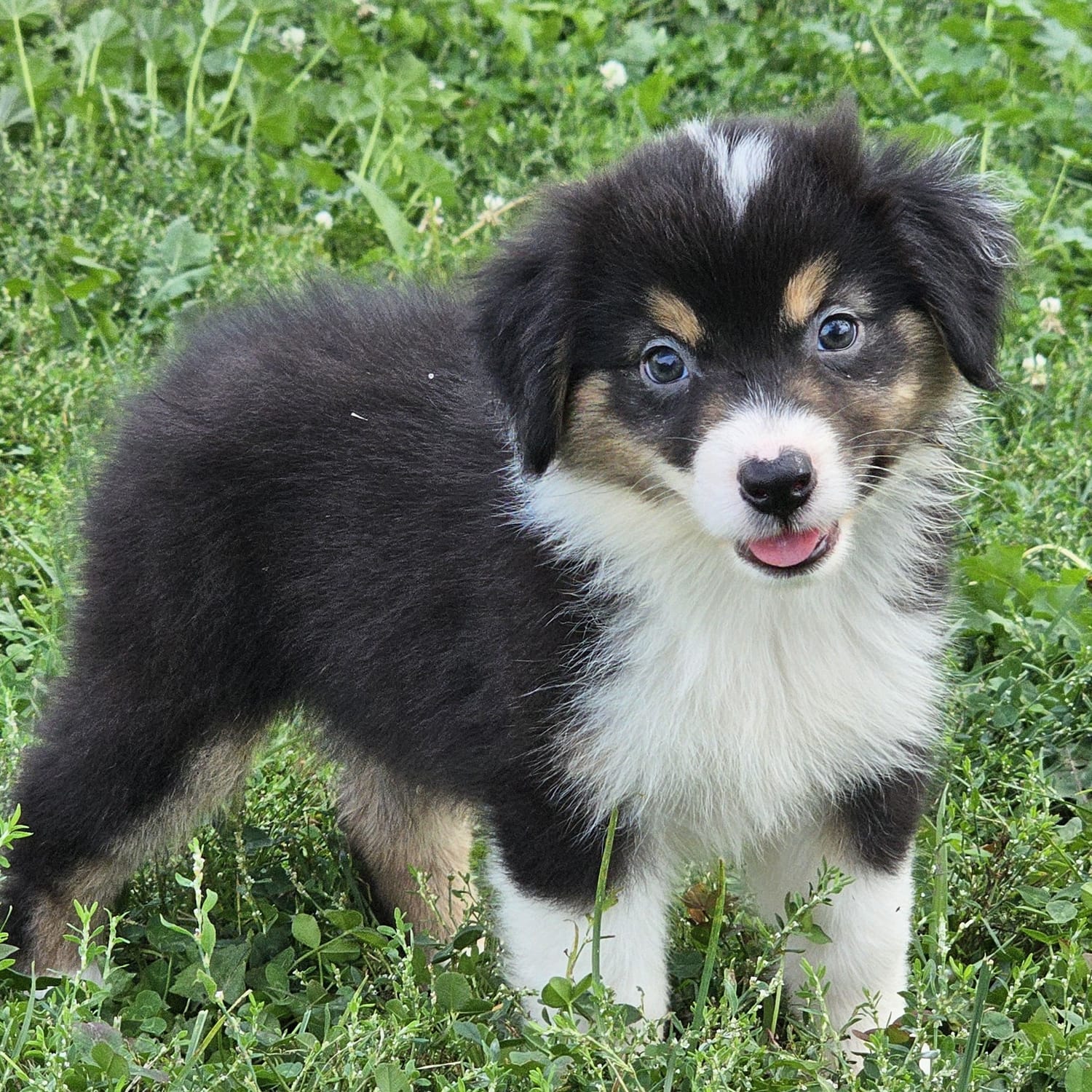
Black Tri
Solid black base with white and copper tan markings. Classic and elegant. Dark brown eyes typical. One of the original Aussie color patterns.
Red Tri
Solid red base with white and copper tan markings. Warm and rich coloring with amber eyes. Striking and beautiful — rarer than black tri.
What Makes Aussies Extraordinary
The Australian Shepherd temperament is unlike any other breed. Understanding it before you bring one home is essential.
Exceptional Intelligence
Consistently ranked among the most intelligent dog breeds in the world. They learn commands in as few as 5 repetitions and remember them for life. This intelligence requires mental stimulation daily — a bored Aussie is a destructive Aussie.
Velcro Devotion
Australian Shepherds are called velcro dogs for good reason — they want to be with their people constantly. They will follow you from room to room, sleep at your feet, and watch your every move. This devotion is profound and lifelong.
High Energy Drive
Bred to work all day on a ranch — Australian Shepherds require 1 to 2 hours of vigorous daily exercise. They are not apartment dogs. They thrive with space, activity, and purpose. A tired Aussie is a happy Aussie.
Eager to Please
One of the most trainable breeds in existence. Australian Shepherds thrive on having a job and pleasing their handler. Positive reinforcement training is highly effective. They excel in virtually every canine sport and working role.
Natural Herding Instinct
The herding instinct runs deep in every Australian Shepherd. Many will attempt to herd children, other pets, and even adults without any training. This instinct can be channeled beautifully through herding sports and structured activities.
Loyal Family Dog
For the right active family an Australian Shepherd is the most loyal, loving, and devoted companion imaginable. They are gentle with children they are raised with, protective of their family, and deeply connected to their home and people.
Health Considerations — What Every Owner Needs to Know
For educational purposes only. Always consult a licensed veterinarian for medical advice.
A genetic condition affecting the hip joint. Responsible breeders OFA test all breeding dogs. Verify your breeder's health testing at ofa.org before purchasing.
Similar to hip dysplasia affecting the elbow joint. OFA elbow evaluation is standard for responsible breeders. TAGA Ranch tests all breeding dogs.
Includes Collie Eye Anomaly and Progressive Retinal Atrophy. Annual CAER eye examinations by a board certified ophthalmologist are the standard for responsible breeding programs.
Idiopathic epilepsy occurs in Australian Shepherds at a higher rate than some breeds. Careful breeding selection and health testing helps minimize occurrence in quality breeding programs.
The MDR1 gene mutation (ABCB1) is found in Australian Shepherds and causes dangerous sensitivity to certain medications — including ivermectin, loperamide, and several chemotherapy agents — that are completely safe for most dogs. Affected dogs can have life-threatening neurological reactions to these drugs. Always inform your veterinarian that your Aussie may carry the MDR1 mutation before any treatment, procedure, or medication. Learn more at ofa.org and ask your breeder about MDR1 testing status.
Always verify your breeder's health testing before purchasing any puppy. The OFA database at ofa.org allows you to search any registered dog by name or kennel. Search TAGA or TAGAs to verify TAGA Ranch health testing results. An AKC Breeder of Merit designation like TAGA Ranch requires verified health testing — it is not self-reported.
Understanding Genetic Health Testing
Genetic testing is one of the most powerful tools responsible breeders have to protect the health of future generations. TAGA Ranch uses two comprehensive testing programs to ensure every breeding decision is informed, responsible, and transparent.
TAGA Ranch uses Orivet powered by Paw Print Genetics — one of the most respected veterinary genetic testing laboratories in the world. This comprehensive DNA panel screens breeding dogs for 11 genetic conditions that can affect Australian Shepherds. Results are reported as Clear, Carrier, or Affected — giving breeders the information needed to make responsible pairing decisions that protect the health of every puppy produced. Learn more at pawprintgenetics.com.
Visit PawPrintGenetics.com →The OFA CHIC Program — Canine Health Information Center — is the gold standard of breeding health programs in the United States. A CHIC number is awarded when a dog completes all breed-required health tests and the results are made publicly available. For Australian Shepherds this includes hip evaluation, elbow evaluation, annual CAER eye examination, and DNA testing. CHIC results are fully searchable by the public at ofa.org — verifying every claim a breeder makes.
Verify at OFA.org →Understanding Your Dog's Genetic Results
The dog does not carry the mutation for this condition and cannot pass it to offspring. The safest possible result for a breeding dog.
The dog carries one copy of the mutation but is not affected by the condition. Can pass the mutation to approximately 50% of offspring.
The dog carries two copies of the mutation and is affected by the condition. Should not be bred in most circumstances.
A dog that is a Carrier for a recessive condition is completely healthy and unaffected by that condition. Responsible breeders pair Carriers with Clear dogs to produce puppies that are either Clear or Carrier — but never Affected. Transparency about Carrier status is a sign of an honest, responsible breeder. Any breeder who claims all their dogs are Clear for everything without testing is either not testing or not being truthful.
TAGA Ranch Tests All Breeding Dogs For These 11 Conditions
Testing performed through Orivet powered by Paw Print Genetics · For educational purposes only · Consult your veterinarian for medical advice
The most critical genetic test for Australian Shepherds. The MDR1 mutation — also called ABCB1 — causes life-threatening sensitivity to certain common medications including ivermectin, loperamide, and several anesthetic and chemotherapy agents. Affected dogs can have severe neurological reactions to drugs that are completely safe for most breeds.
⚠️ Always tell your veterinarian your Aussie may carry MDR1 before any treatment or medication.
A hereditary eye condition causing progressive degeneration of the retina leading to vision loss and eventual blindness. PRA-prcd is one of the most common forms affecting Australian Shepherds. Affected dogs typically show night blindness first before progressing to complete vision loss. Testing identifies dogs that should not be bred together to produce affected puppies.
Risk: Progressive vision loss · No treatment currently available
A hereditary eye condition affecting the development of the choroid — a layer of tissue in the eye. Severity ranges from mild and non-progressive to severe with retinal detachment and blindness. CEA is common in herding breeds including Australian Shepherds. Annual CAER eye examinations by a board certified ophthalmologist are recommended in addition to DNA testing.
Risk: Ranges from subclinical to significant vision impairment
A progressive neurological disease affecting the spinal cord — often compared to ALS in humans. DM typically appears in older dogs and causes progressive weakness and paralysis of the hindlimbs. While the mutation is common in Australian Shepherds not all dogs with the mutation will develop clinical disease. Testing helps breeders make informed decisions about pairings.
Risk: Progressive paralysis — typically in dogs over 8 years old
A form of hereditary cataract specific to Australian Shepherds that can cause progressive vision impairment. Unlike age-related cataracts these develop due to a genetic mutation and can appear at a younger age. DNA testing combined with annual CAER eye examinations provides the most complete picture of eye health in breeding dogs.
Risk: Progressive vision impairment from hereditary lens changes
A hereditary eye condition causing degeneration of the cone photoreceptors in the retina. Affected dogs develop day blindness — called hemeralopia — and are often sensitive to bright light while having relatively normal vision in low light conditions. Testing allows breeders to avoid producing affected puppies.
Risk: Day blindness and light sensitivity
A hereditary eye condition causing the formation of raised lesions on the retina. In many cases these lesions resolve without causing significant vision problems — however in some cases they can persist and affect vision. Testing allows responsible breeding decisions to minimize the occurrence of this condition in future generations.
Risk: Retinal lesions — often mild but can affect vision
A condition causing elevated levels of uric acid in the urine which can lead to the formation of urate bladder and kidney stones. Affected dogs may experience painful urinary tract problems requiring veterinary intervention. Testing allows breeders to make informed pairing decisions to reduce the incidence of this painful condition.
Risk: Urate stone formation — urinary tract complications
A severe progressive neurological storage disease affecting the nervous system. NCL6 is one of the most serious genetic conditions in Australian Shepherds — affected dogs experience progressive neurological decline including vision loss, behavioral changes, seizures, and loss of motor function. Testing is critical for responsible breeding programs.
Risk: Severe progressive neurological disease — significantly shortened lifespan
A condition specific to Australian Shepherds affecting the absorption of vitamin B12 (cobalamin) in the intestines. Affected dogs cannot absorb adequate B12 from food leading to anemia, failure to thrive, and neurological problems if untreated. The condition is manageable with regular B12 supplementation when identified early.
Risk: Anemia and neurological issues — manageable with treatment
A condition causing abnormal bone growth of the skull and jaw in young dogs. Affected puppies experience significant pain and difficulty eating during the active growth phase typically between 4 and 8 months of age. While the abnormal bone growth often stabilizes after growth stops the condition can cause lasting effects on jaw function.
Risk: Painful jaw and skull bone growth abnormalities in young dogs
TAGA Ranch tests all breeding dogs through Orivet powered by Paw Print Genetics for all 11 conditions listed above and participates in the OFA CHIC program — the gold standard of breeding health transparency in the United States. Our results are publicly verifiable at ofa.org — search TAGA or TAGAs to review our dogs' health records.
We believe complete transparency about genetic testing is not optional — it is a responsibility. Every family that adopts from TAGA Ranch deserves to know exactly what health testing was done on the parents of their companion. We will always answer your health questions directly and honestly. No breeder can guarantee a perfectly healthy dog — but a breeder who tests, is honest about results, and makes responsible breeding decisions gives every puppy the best possible start.
Questions about our specific breeding dogs' test results? Call or text Toni directly at 401.468.PETS — she will walk you through every test result personally.
🧬 Genetic & Health Testing at TAGA Ranch
TAGA Ranch tests breeding dogs through Orivet powered by Paw Print Genetics — screening for genetic conditions relevant to Australian Shepherds including MDR1, PRA, CEA, DM, hereditary cataracts, and more. We also utilize the AKC DNA Panel — including breed identification, parentage verification, and genetic health screening through the AKC Canine Health Information Center. We participate in the OFA CHIC program — the gold standard of health transparency in responsible breeding. Results are publicly verifiable at ofa.org — search TAGA or TAGAs.
Please note that in some cases we may utilize generational testing — where offspring of fully tested parents may not require the complete panel themselves based on documented clear lineage. We are always happy to discuss the specific testing on any of our breeding dogs directly. Call or text Toni at 401.468.PETS with any questions.
What Can You Do With an Aussie?
Australian Shepherds are arguably the most versatile breed in all of dog sports. Whatever you love doing — there is an Aussie sport for you. These dogs do not just participate — they excel.
AKC Agility
Australian Shepherds are born for agility — fast, athletic, responsive, and laser focused on their handler. One of the top agility breeds in the world. TAGA Ranch produces dogs with natural agility aptitude.
Herding Trials
Herding is the Australian Shepherd's original purpose. Watching an Aussie work livestock is one of the most breathtaking things in all of dog sports. The instinct lives in every TAGA Ranch dog.
AKC Obedience
Obedience showcases the incredible trainability of the Australian Shepherd. Precision heeling, retrieves, and signals — Aussies compete at the highest levels of obedience competition worldwide.
AKC Rally
Rally combines obedience and fun — handler and dog navigate a course of stations together. A fantastic entry point into competition for new handlers and experienced competitors alike.
Scent Work
A newer AKC sport where dogs locate hidden target odors. Aussies excel because of their focus, drive, and natural desire to work. A wonderful mental workout accessible to any dog and handler.
Conformation Shows
Conformation evaluates dogs against the breed standard. TAGA Ranch produces dogs with correct conformation and breed type that succeed in both the show ring and as family companions.
Aryanne Robbins — Junior Showmanship
Junior Showmanship is one of the most rewarding programs in all of dog sports — where young handlers between the ages of 9 and 18 compete based on their skill in presenting their dog in the show ring rather than the dog's conformation itself. It builds confidence, sportsmanship, animal handling skills, and a lifelong love of the sport.
Aryanne Robbins — Toni's youngest daughter and right hand at TAGA Ranch — is an active Junior Handler. She has grown up with these dogs her entire life — from being present at every birth through training, showing, and competing alongside them. She also gives back to her community by helping young people with their dogs for 4H and FFA programs — sharing the knowledge and love she grew up with.
If you are a young person interested in Junior Showmanship with an Australian Shepherd — a TAGA Ranch companion may be exactly the right partner for your journey. Contact Toni at 401.468.PETS to learn more.
ASCA Titles & Programs

Honest Answers for Future Families
One of the most important things a responsible breeder can do is help you decide honestly whether this breed is right for your lifestyle. Not every family is the right fit for an Australian Shepherd — and that is okay.
From Toni's Heart
"I have placed Australian Shepherds with hundreds of families over 17 years. The ones who thrive are the ones who were honest with themselves before they applied. This breed is not for everyone — and the best thing I can do for our dogs and for you is to help you figure that out before we fall in love with each other. If you read this guide and your heart is racing with excitement — you might just be an Aussie person. Call me. Let's talk."
Ready to Meet Your TAGA Ranch Companion?
Now that you know the breed — come meet the breeder. TAGA Ranch raises Australian Shepherds with holistic care, faith-guided stewardship, and 17+ years of dedicated expertise. Every companion is temperament matched to their forever family.
This breed guide is provided for educational purposes only. Information about health conditions is general in nature and does not constitute veterinary advice. Always consult a licensed veterinarian for medical guidance specific to your dog. Registry information sourced from akc.org, asca.org, and australianshepherds.org.