


Puppy Development Stages
A Guide to Understanding Your Puppy from Birth to Adulthood
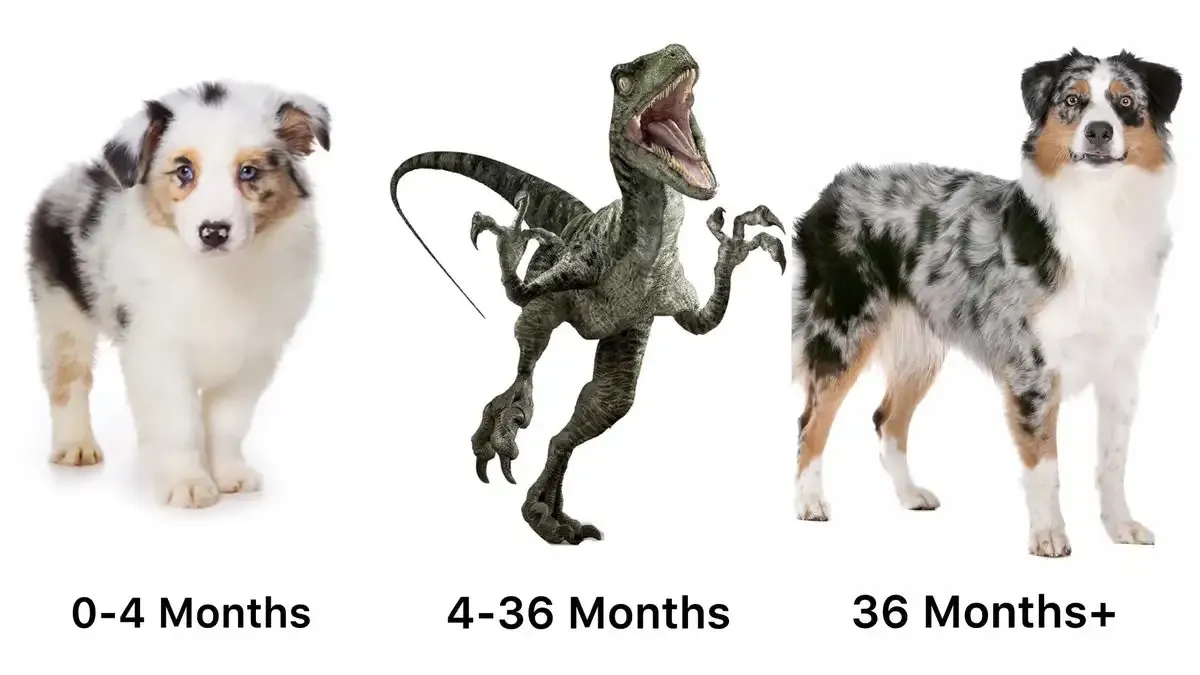
When we picture a puppy, we may imagine an adorably tiny newborn just learning to open his eyes. Others picture a high-energy whirlwind chasing balls, sniffing everything, and exploring the world at full speed.
Both images are correct — they simply represent different stages of puppyhood.
Puppyhood is not a short phase. Depending on breed and size, dogs do not reach full physical and mental maturity until 1–2 years of age, and sometimes even later socially. During that time, they move through clearly defined developmental stages that shape temperament, confidence, and behavior.
While different training models divide puppyhood into 5–7 stages, we will simplify it into five primary developmental periods.
The Imprinting (Critical Learning) Period
Birth – 16 Weeks
Like human children, puppies experience a critical window of brain development when they are highly impressionable. This period is often called the Critical Learning Period.
During these first 16 weeks, puppies absorb information faster than at any other time in their lives. Experiences during this stage — both positive and negative — have lasting effects on personality, confidence, and behavioral tendencies.
Because development happens rapidly, this stage is further divided into smaller phases.
Birth – 7 Weeks
(Neonatal, Transitional, and Early Socialization Periods)
Neonatal Period (0–2 Weeks)
Puppies are born blind and deaf.
They rely completely on their mother for warmth and nutrition.
Gentle neurological stimulation and proper handling support healthy brain development.
Transitional Period (2–3 Weeks)
Eyes and ears open.
Puppies begin standing and walking.
Awareness of their environment increases.
Early Socialization Period (3–7 Weeks)
Puppies begin interacting with littermates.
Play behavior teaches bite inhibition and communication.
Baby teeth erupt.
Puppies transition from nursing to solid food.
They are fully weaned by around 6–7 weeks.
This is an extremely important time for learning species-appropriate behavior. Puppies should not leave their littermates before 8 weeks of age, as they are still learning vital social and emotional skills.
Responsible breeders use this time to:
Provide safe environmental enrichment
Introduce gentle human handling
Expose puppies to normal household sounds
Begin foundation confidence building
7–16 Weeks
(Primary Socialization Period)
This is often the ideal time for puppies to join their new families (around 8 weeks of age).
From 7–16 weeks, puppies are highly receptive to:
Socialization with people of all ages
Positive exposure to new environments
Introduction to grooming, vet handling, and travel
Beginning obedience and structure
Fear Period (Approximately 8–11 Weeks)
During this time, puppies may be especially sensitive to frightening experiences. A single traumatic event can leave a lasting impression.
Best practice:
Keep exposures positive and controlled
Avoid overwhelming environments
Step in calmly if your puppy becomes frightened
Pair new experiences with rewards
Quality socialization during this window builds:
Confidence
Emotional resilience
Stable adult temperament
4–6 Months
(Juvenile Period)
This is often referred to as the “teething phase.”
Baby teeth fall out.
Adult teeth erupt.
Increased chewing behavior is normal.
Energy levels rise.
Puppies may appear more independent.
Coat changes often begin during this time, and most puppies reach close to their adult height.
This stage is ideal for:
Reinforcing boundaries
Continuing structured training
Increasing mental stimulation
Maintaining consistent routines
Some puppies may experience a brief secondary fear phase, where they become temporarily cautious about new stimuli. This typically passes within a few weeks.
6–12 Months
(Adolescent Period)
Adolescence can feel like a regression phase — but it is completely normal.
During this stage:
Hormones influence behavior.
Energy peaks.
Puppies test boundaries.
Distractions become more interesting than their humans.
Previously learned commands may seem “forgotten.”
Consistency is key.
Continue:
Clear leadership
Positive reinforcement training
Exercise appropriate for breed
Mental enrichment
This is not defiance — it is development. Patience during this stage creates a well-balanced adult dog.
1–2+ Years
(Maturity Period)
Physical maturity varies by breed size:
Small–medium breeds: Around 12 months
Large breeds: 18–24 months
Giant breeds: Sometimes closer to 24 months
However, mental and social maturity may continue developing until 2–4 years of age.
By this stage, a properly socialized and consistently trained dog should:
Demonstrate emotional stability
Show reliable responses to training
Exhibit established temperament traits
Maintain a strong bond with their family
Why Early Development Matters
Research consistently shows that early neurological stimulation, proper socialization, and structured guidance during puppyhood dramatically reduce the risk of:
Fear-based aggression
Separation anxiety
Excessive barking
Resource guarding
Reactivity
Early investment creates lifelong stability.
At TAGA Ranch, we believe that raising a well-balanced dog begins long before they go home. Thoughtful early handling, enrichment, and social exposure create the foundation for confident, emotionally secure companions.
For more information you can check out http://wonder-puppy.com/puppy-stages
TAGA Ranch | Australian Shepherd Breeder in Iowa
Coon Rapids, Iowa
Serving Iowa, the Midwest, United States, Canada & Puerto Rico
© 2009 TAGA Ranch. All rights reserved.